
Ask the Spud GP: Wrinkly looking spuds in storage? Spud GP has some insights.
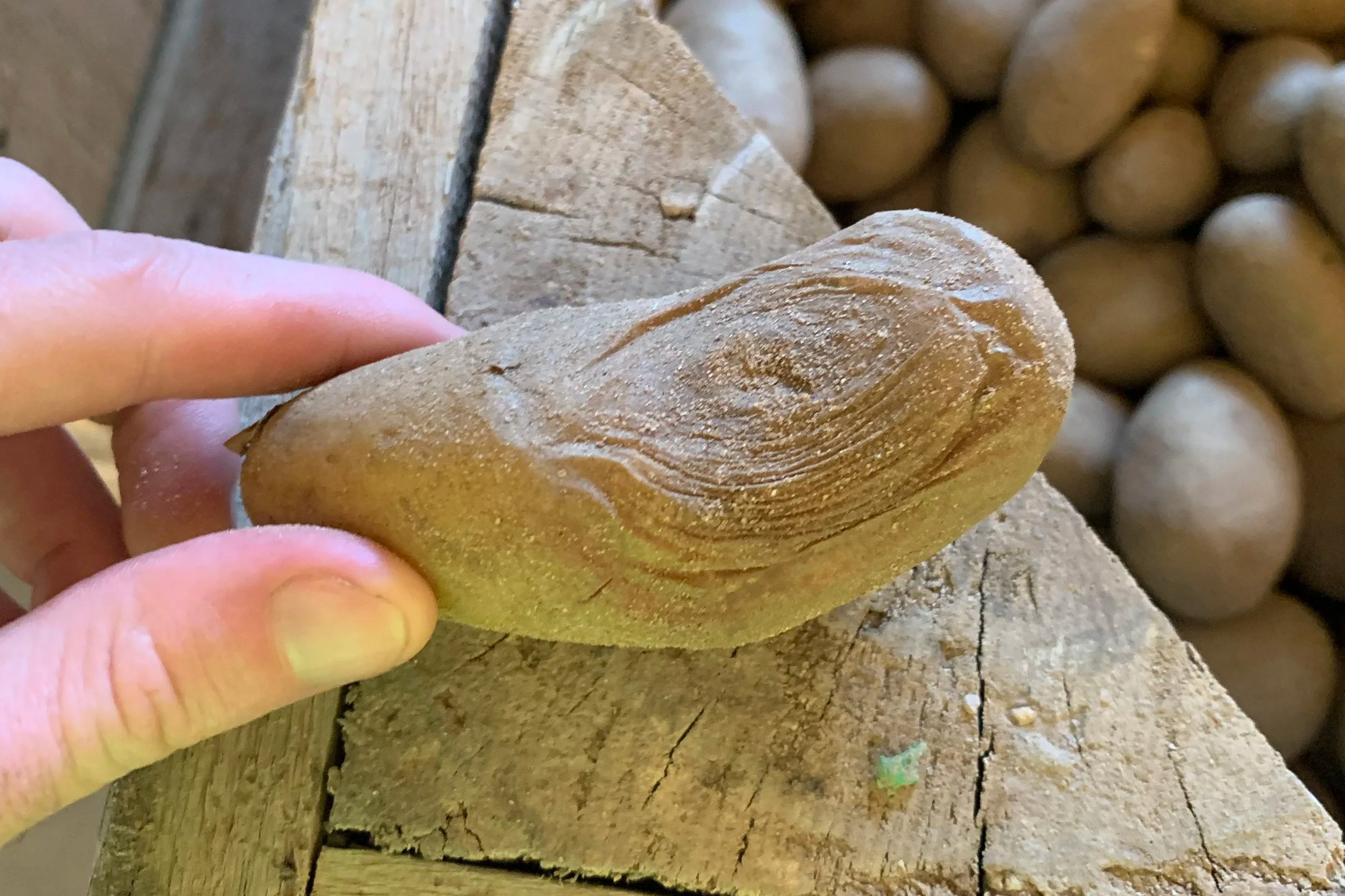
Dear Spud GP
I’ve got a few tonnes of fresh market spuds still in storage, but I’ve noticed a few rots starting to get in. I think it looks like Fusarium. I’ve currently got the room running at 8 °C – would it be worth dropping the temperature a few degrees to hold the disease back?
R Inkled
Dear Mr Inkled,
It does indeed look like Fusarium dry rot! Considered one of the most important storage diseases of potatoes worldwide, 17 different Fusarium species and five variants have been identified which can cause these symptoms.
Some of these Fusarium species are particularly important to control as they produce mycotoxins, especially if storage temperatures are closer to 10 °C than 5 °C. One group of these mycotoxins – the trichothecenes – can cause serious health issues in humans and animals.
Fusarium dry rot typically causes light to dark brown or black lesions that remain dry, as opposed to the sloppy, liquefying tuber tissue associated with diseases such as Pythium and Phytophthora. The pathogen penetrates the tuber, rotting out the centre. The centre then shrinks and collapses, leaving behind the cavities clearly visible in your photo at right.
Disease severity often correlates with the level of damage at harvest. Symptom development also relates to tuber age; young tubers are resistant but, as storage time goes on, the dry rot pathogen becomes more aggressive.