
WPC Special: Advancements in Potato Breeding
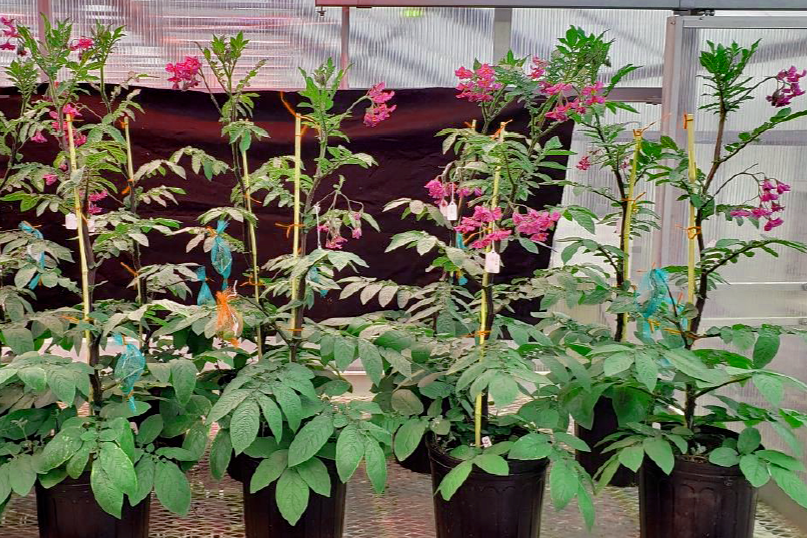
Gregor Mendel, 19th Century Austrian-Czech polymath, might have spent most of his life as a monk in a monastery, but he was still well ahead of his time. The significance of his painstaking experiments with pea plants were not appreciated until more than 30 years after their publication. However, it was these pioneering experiments that established the fundamental laws of genetics. They also proved what farmers had known for millennia, namely that crossbreeding could be used to improve desirable traits.
While Mendel knew nothing of DNA, the discovery of its role and structure confirmed his conclusions. It also revolutionised biology, revealing how genetic information is stored and transmitted.
These breakthroughs paved the way for the development of DNA sequencing technologies in the 1970s. For the first time, this allowed us to directly map the entire genetic code of an organism. Modern plant breeding has since harnessed these advances, identifying and incorporating beneficial genes with unprecedented precision. Just as artificial intelligence has transformed computing power, gene sequencing has massively accelerated the development of improved crop varieties.
The potato was genetically unravelled in 2011. Since then, research groups from around the world have been studying the incredible 39,000 genes that it contains. For comparison, humans contain a mere 19,900 genes. In other words, the potato is surprisingly genetically complicated.