Potato breeding and variety selection
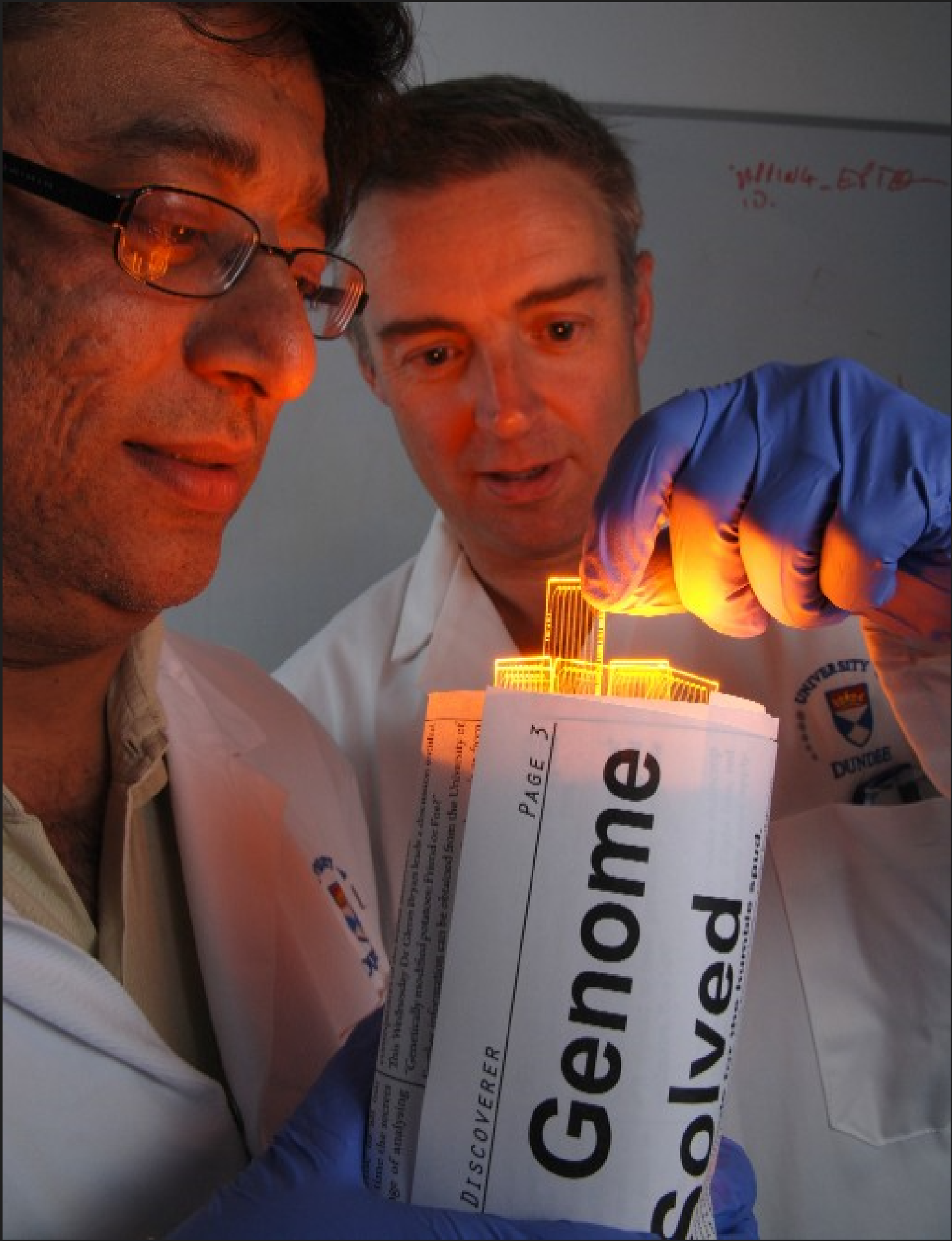
Drs Hein, Sharma and Chen work on potato genetics, genomics and breeding. Potatoes are particularly difficult to breed as they have four different copies (alleles) of each gene (tetraploid) instead of the normal two (diploid). This means there are a lot more possible outcomes from crossing varieties, with outcomes frequently unpredictable.
“A really big moment for us was the release of the potato genome in 2011. Sanjeev was an author on this publication, which was a big international effort with many institutes and researchers involved. It’s a really big genome. If you were to print it out on paper, you would cover a distance of 2,600 kilometres, nearly the length of the Australian east coast,” explains Ingo.
According to Dr Sharma, breeding before the potato genome was known was a bit like going to a library blindfolded and trying to find a book. Now, through genome sequencing, we know which book is where.
One of the puzzles the group has been examining is the genetics behind disease resistance.