
Optimising biosecurity using Next Generation Sequencing
Desiree potatoes grown under ambient conditions (left) or with exposure to 33°C soil temperature for one week before harvest (right). From Fogelman et al, 2019.
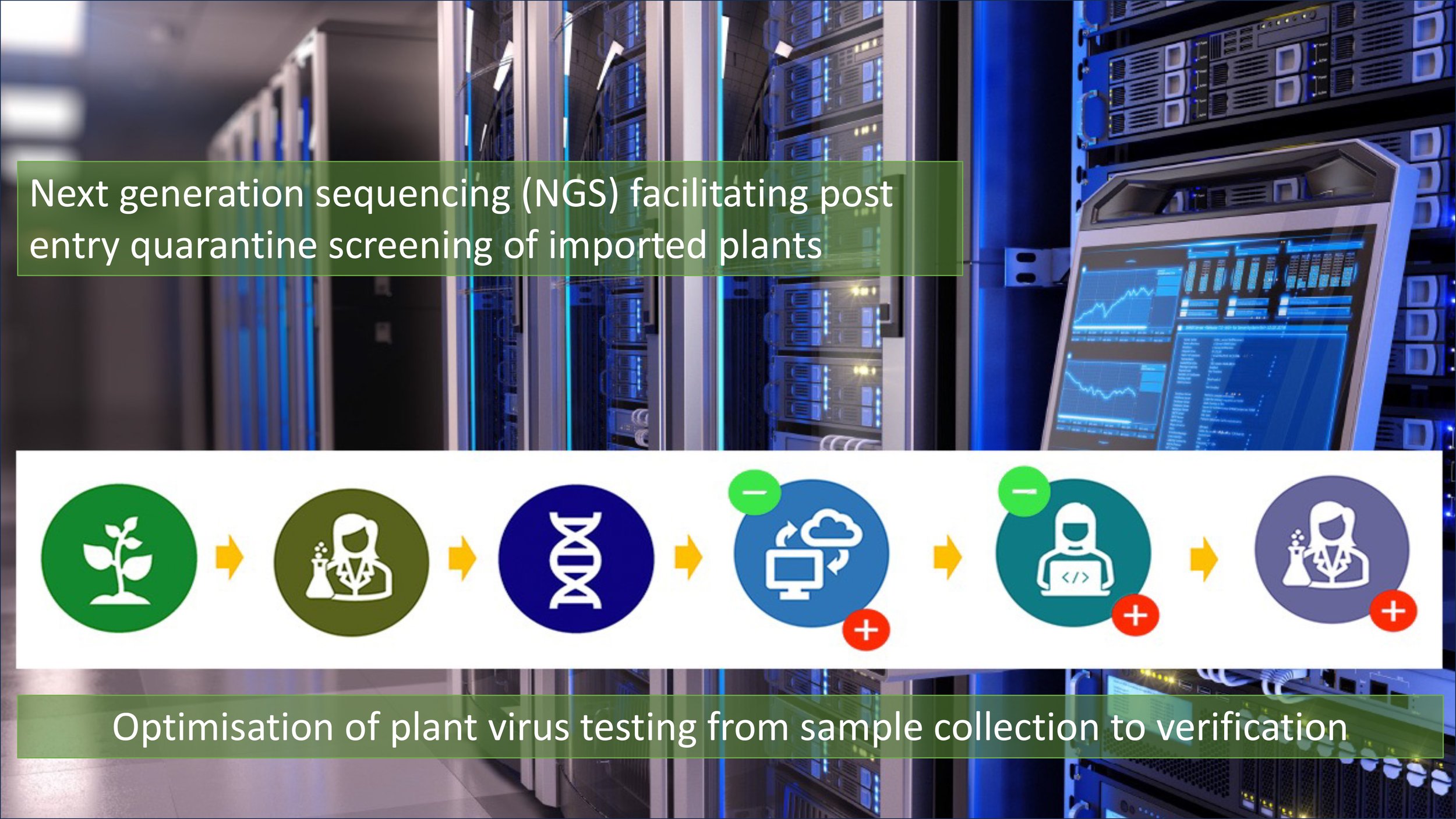
Traditional pathogen testing methods are often time-consuming, resourceintensive, and can yield ambiguous results. This is where Next Generation Sequencing (NGS) steps in as a game-changer. NGS provides a scalable, robust, accurate, and rapid diagnostic platform, promising to expedite ‘plant health’ screening and reduce quarantine time.
A collaborative Horticulture Innovation Australia project spanning multiple crops has shown that NGS is a feasible alternative that will reduce time and improve accuracy of quarantine testing.
The project Improving Plant industry access to new genetics through faster and more accurate diagnostics using next-generation sequencing (MT18005) investigated the application of advance gene technology – known as Next Generation Sequencing (or NGS) to screen imported horticultural plant materials in PEQ.