
Lights, drone, action: Lessons in spray techniques
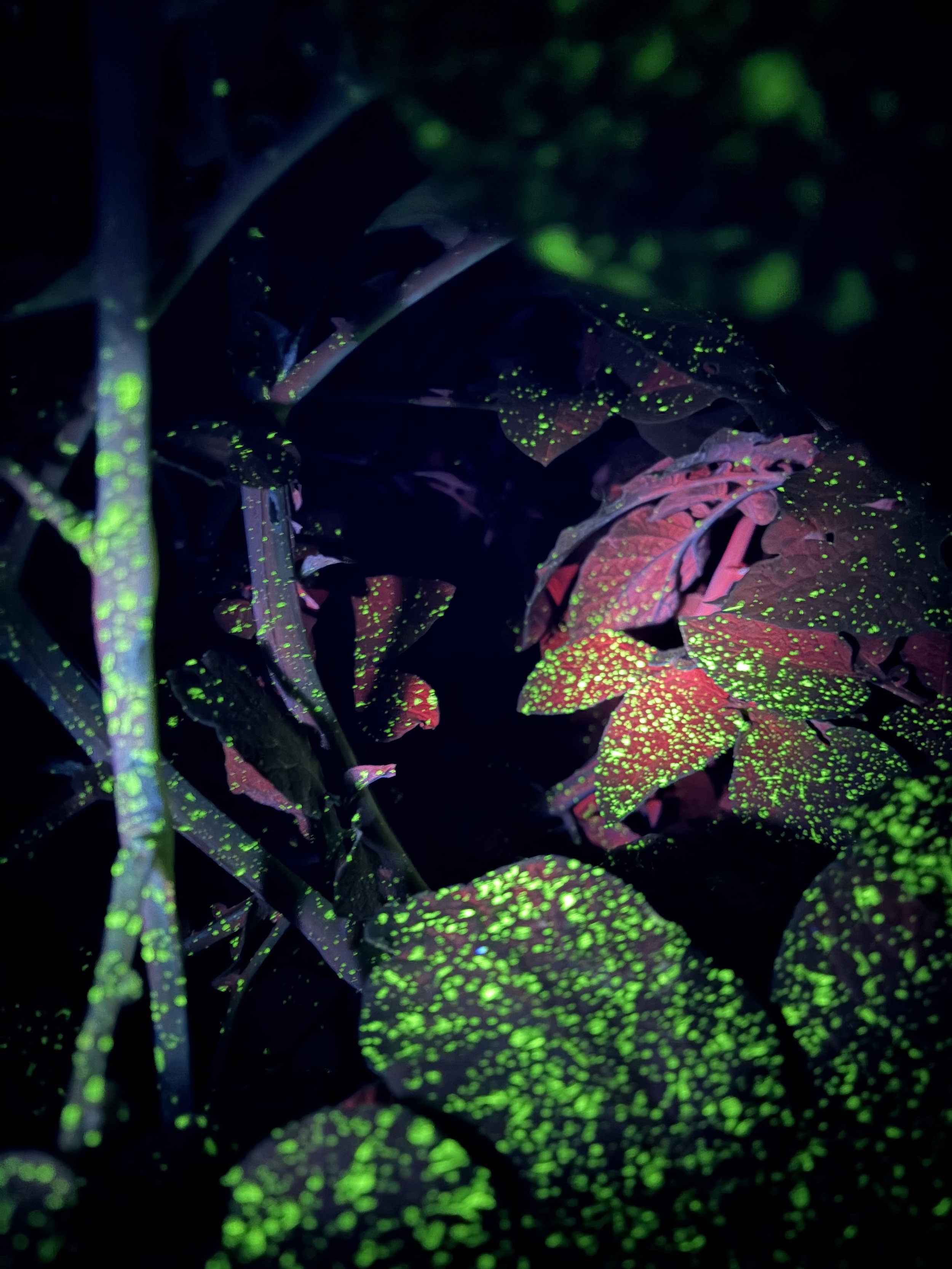
Assessing spray coverage under UV lights | Photo by Len Ibbotson
Last month, approximately 30 industry members gathered for the PotatoLink drone spray demonstration event in Dean, Victoria. This practical demonstration compared drone (aerial) spraying technology with traditional ground-based spray rigs, assessing coverage, efficacy, and operational considerations under real field conditions.
Presenters Stuart Grigg (PotatoLink Regional Rep), Len Ibbotson (Technical Services Lead, Horticulture, Syngenta), and Adrian White (drone operator, RotaVision) led a Q&A session, sharing insights on spray techniques, equipment calibration, and operational considerations. Despite the cold Ballarat wind, attendees were also able to enjoy a community-cooked barbeque dinner in support of the Mollongghip Hall, providing a great opportunity to catch up and connect.
Gusty winds of 20–35 km/h proved a major factor limiting drone performance and made the demonstration challenging on the night. Each spray method used different nozzles, water rates, and operational parameters (height and speed for drones; speed and boom height for rigs). To check coverage, fluorescent dye was added to the sprays, and water-sensitive papers were placed throughout the canopy. These were later examined under UV light for visual and quantitative comparisons.
Drone passes showed spray drift and streaking, with uneven coverage between rows and overestimated swatch widths. Ground rigs, on the other hand, achieved better coverage and penetration due to slower travel speeds, higher water volumes, and boom positioning closer to the canopy.
Syngenta’s Technical Services Lead and event presenter Len Ibbotson, explained:
“Achieving thorough coverage in a vigorous potato canopy is inherently difficult.”
“Under windy conditions, the ground rig outperformed the drone due to a combination of a slower travel speed, appropriate nozzle technology, higher water rates, better patternation of spray and that the boom was able to be situated close to the canopy.”
Other adjustments to operational parameters also had measurable impacts. Len emphasised that no single setup suits all conditions.
“It’s about balance,” he said.
“You need the right combination of droplet size, water rate, flight height, and environmental timing, and that changes from paddock to paddock.”
So, when do drones provide a real advantage? Even though canopy penetration was lower under windy conditions, drones offer important operational and agronomic benefits, especially after heavy rain.
Key benefits of drone spraying include:
No soil compaction, supporting controlled traffic farming systems.
Rapid response time, enabling targeted applications between rainfall events.
Lower labour and logistics demand, particularly for smaller fields or patch spraying situations.
“After major rain events, drones let growers get back into the crop as soon as foliage dries,” Stuart said.
“That’s a game-changer for applying curative fungicides when infection is developing but not yet visible.”
Even with challenging winds, the demonstration provided valuable insights into optimising both drone and ground systems. Under these conditions, the consensus was clear: for high disease pressure or dense canopies, ground rigs remain most reliable. They allow higher water volumes, adjustable boom heights, and optimised spray angles for deeper canopy coverage which is critical for fungicide and insecticide effectiveness.
The message from presenters was simple:
“It’s horses for courses. Know your product, understand your conditions, and select the right tool accordingly.”
Attending growers took away important lessons on spray techniques and equipment calibration, with many considering adjustments to their own practices, and one even inspired to invest in their own drone setup for future applications.
Keep an eye out for a detailed article on drone spraying and its effectiveness in the upcoming Autumn PotatoLink magazine.
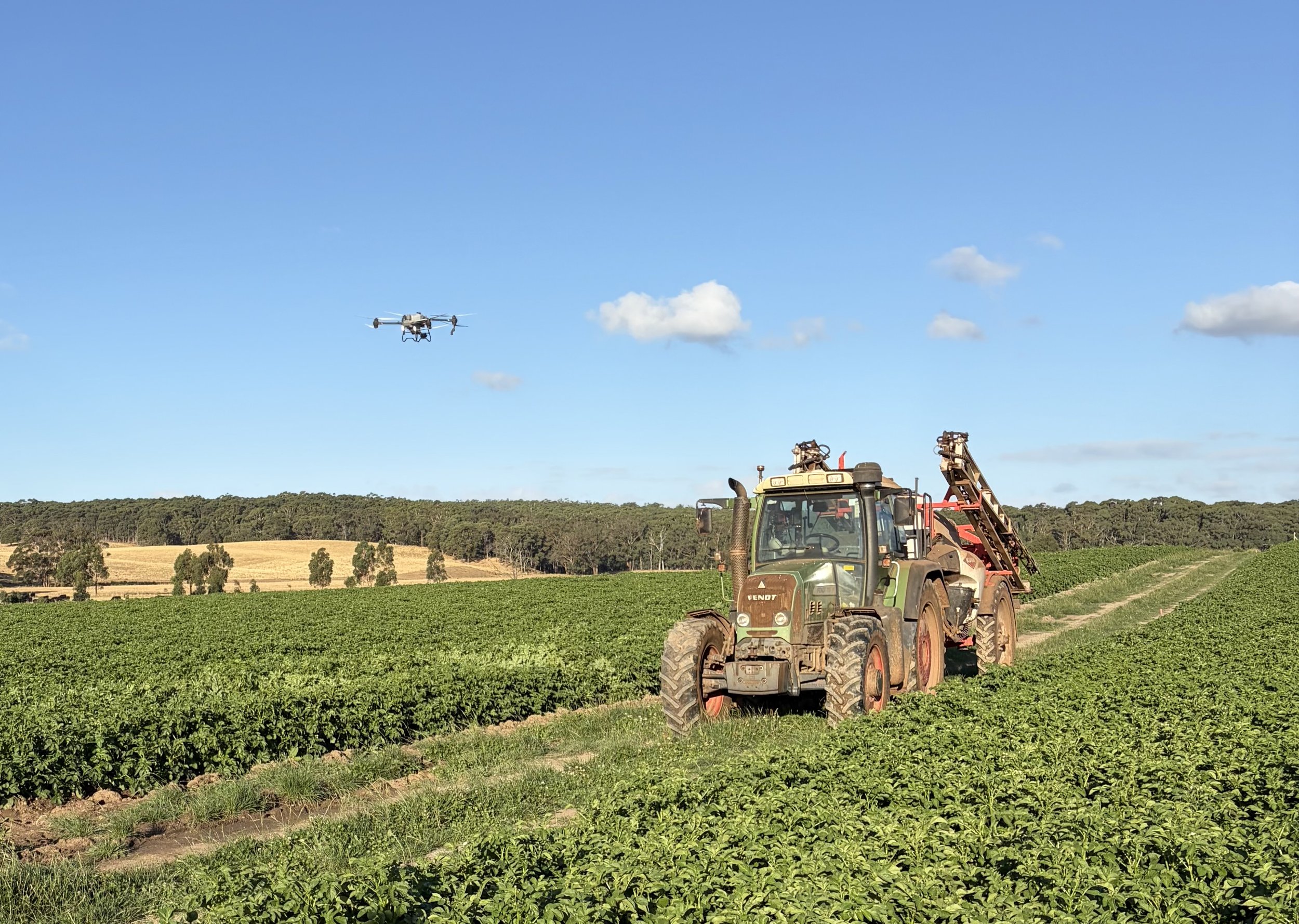
Drone and tractor preparing for spray application | Photo by Len Ibbotson
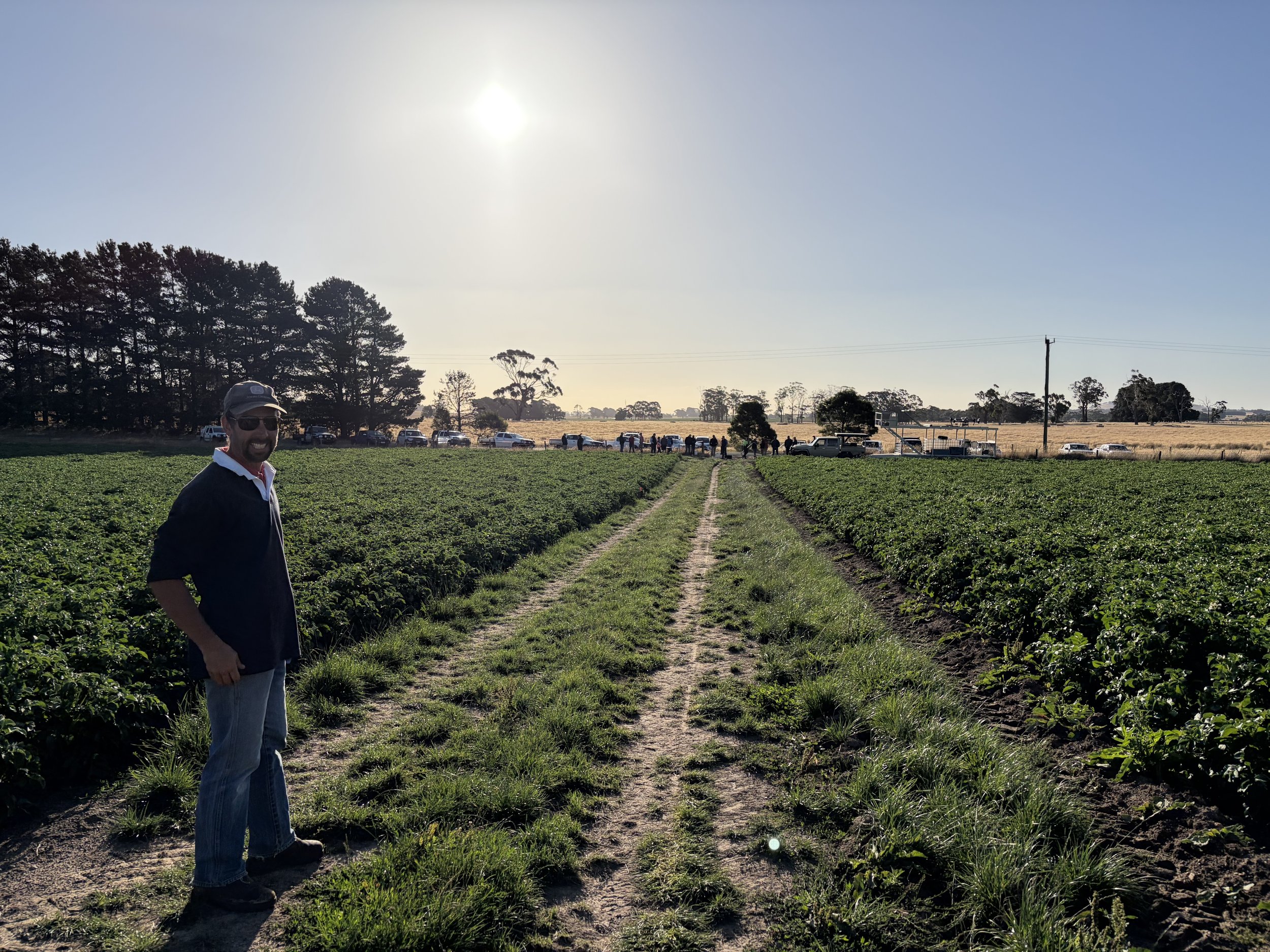
PotatoLink Regional Rep Stuart Grigg standing in the field as attendees gather at the bottom of the paddock | Photo by Len Ibbotson
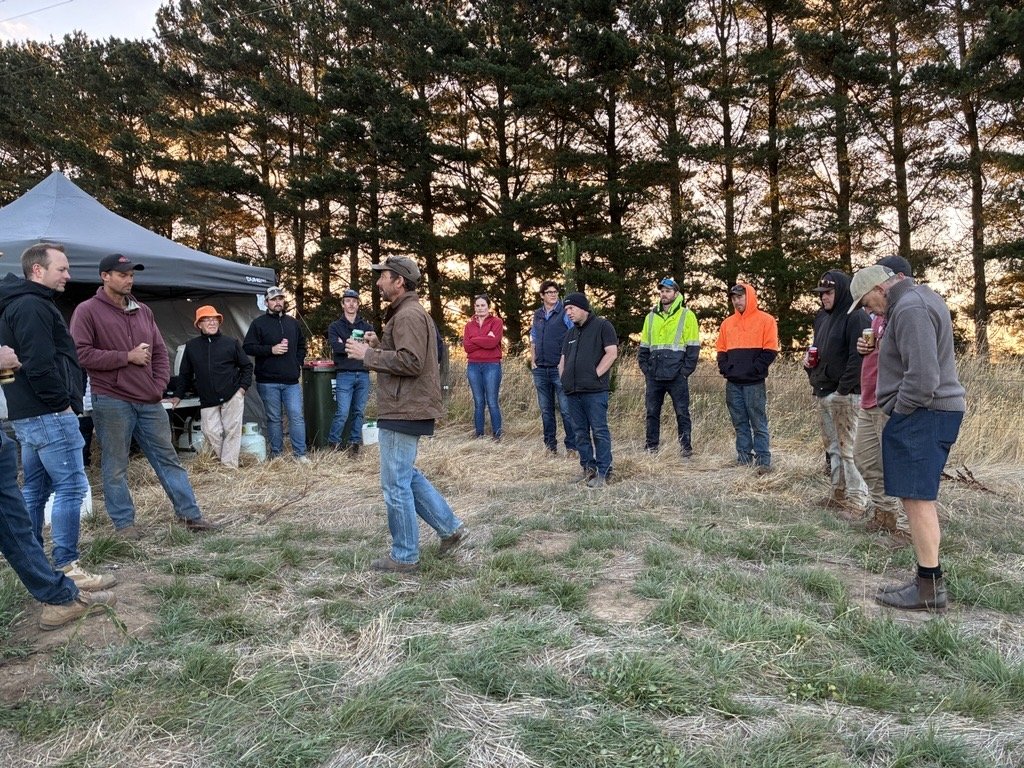
Growers and advisors gathering for the Q&A | Photo by Len Ibbotson
