Building confidence in Integrated Pest Management for potatoes
Potato growers, agronomists, and processors from across Tasmania came together last week to strengthen their understanding of Integrated Pest Management (IPM) and how it can be applied as a whole-system approach in potato rotations.
Two on-farm events were held in Tasmania’s north, both hosted by local potato growers. The events focused on the foundations of IPM, combining theory with hands-on learning to build confidence and practical skills.
Experts Dr Paul Horne and Rebecca Addison from IPM Technologies guided participants through the principles of IPM, pest and beneficial identification, monitoring techniques and cultural control strategies. The program also included updates on integrated disease management projects from Audrey Leo (Simplot) and researchers Robert Tegg and Jonathan Amponsah from the Tasmanian Institute of Agriculture.
Understanding insects and how to monitor
A key focus of the events was understanding insects within the broader cropping system. Participants explored how to correctly identify pests and beneficial insects at different life stages, understand their lifecycles and recognise the environments that support or suppress them.
“Once growers can confidently identify what they’re seeing in the crop, it changes the conversation,” PotatoLink’s Steph Tabone said.
“Not all insects are pests, and understanding that opens up a lot more management options.”
The structure of the events allowed attendees to first explore the ‘why’ behind IPM before moving into practical field demonstrations. In the paddock, Dr Paul Horne demonstrated scouting techniques, identification skills and discussed tools that support effective monitoring.
Cultural controls
A strong message throughout was the importance of cultural controls and planning ahead. Discussions highlighted that many IPM decisions, such as managing weeds, rotation planning or addressing pests like white-fringed weevil, need to happen well before potatoes go into the ground.
While chemical controls still have a place, the message was clear that they should be used to support IPM, not replace it, and only when they’re genuinely needed.
Participants were encouraged to start small when adopting IPM, trialling approaches at a paddock scale rather than attempting partial implementation.
Key takeaways
Across both events, attendance was strong and feedback showed high levels of satisfaction, with attendees valuing the balance of theory and practical learning, as well as access to industry experts.
Importantly, attendees reported a stronger understanding of IPM basics, improved ability to identify beneficial insects, greater awareness of non-chemical management options and opportunities to reduce insecticide use. Many also highlighted the value of learning about IPM strategies for Tomato Potato Psyllid (TPP) and the integrated disease management project updates.
“What really stood out was the shift in thinking - seeing IPM as a long-term system rather than a quick fix,” Steph said.
Several potential practice changes stood out to participants, including increasing monitoring of pests and beneficials, introducing flowering plants to support beneficial insects, and improving pre-plant pest management. Agronomists also noted the importance of sharing new IPM learnings with the growers they work with.
Interest in future extension activities remains strong, with participants keen to learn more about potato mop top virus as research progresses, as well as irrigation management and seed quality.
“There’s a real appetite for this kind of learning. These events showed that growers are keen to understand the system better and are open to trying new approaches when they’re given the knowledge and tools to do so,” Steph said.
Keep an eye out for a more detailed report in the next edition of PotatoLink magazine, which will include further insights and practical details on implementing IPM in potato production. And be sure to subscribe to the PotatoLink e-bulletin and follow us on LinkedIn to make sure you don’t miss an event in your area.
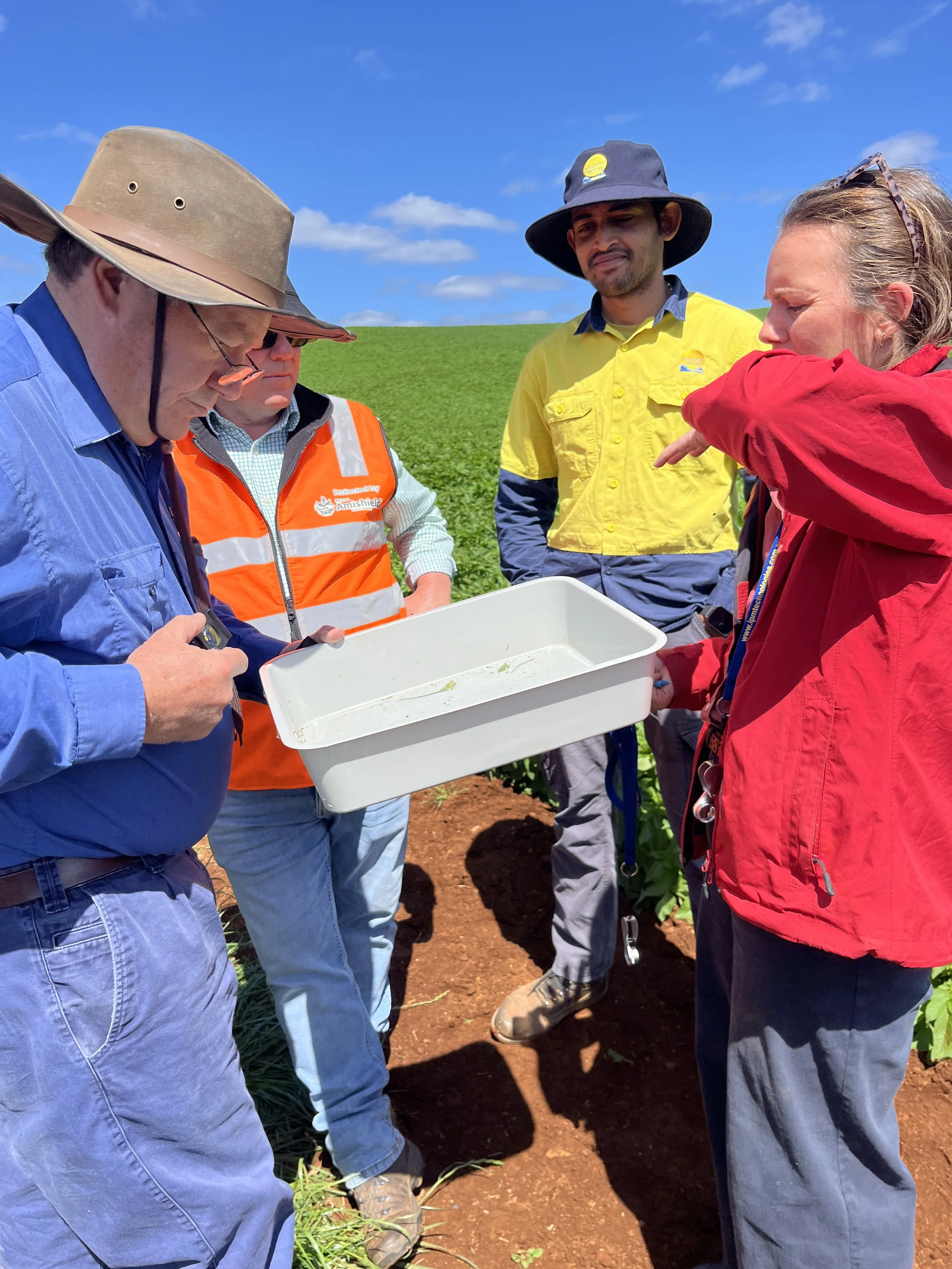
Sisters creek event – Attendees observing insects collected in the field, Rebecca Addison discussing what was found
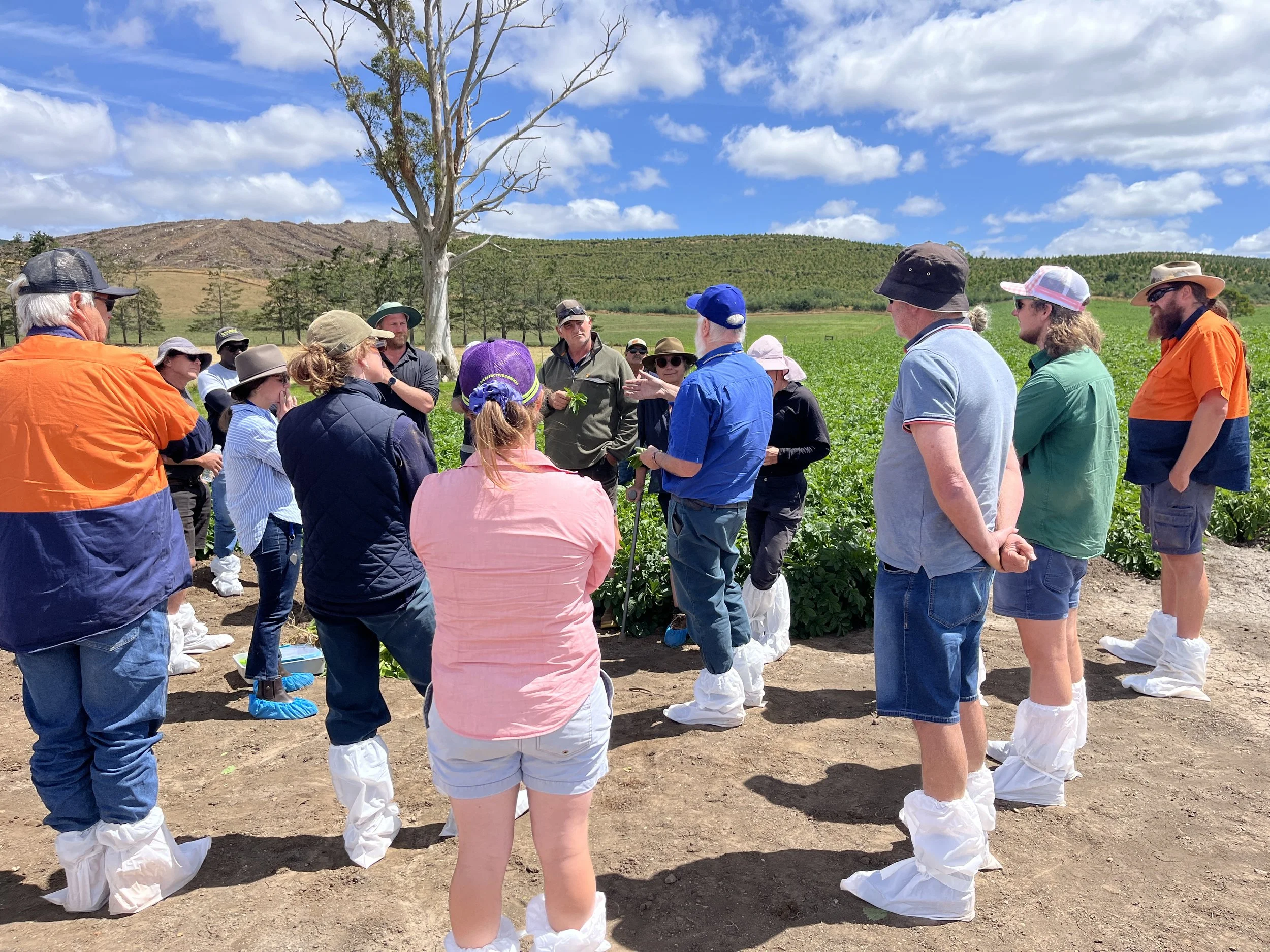
Branxholm event - Attendees in the field hearing from host grower John Cresswell and Dr Paul Horne on pest management practices on this paddock’s crop
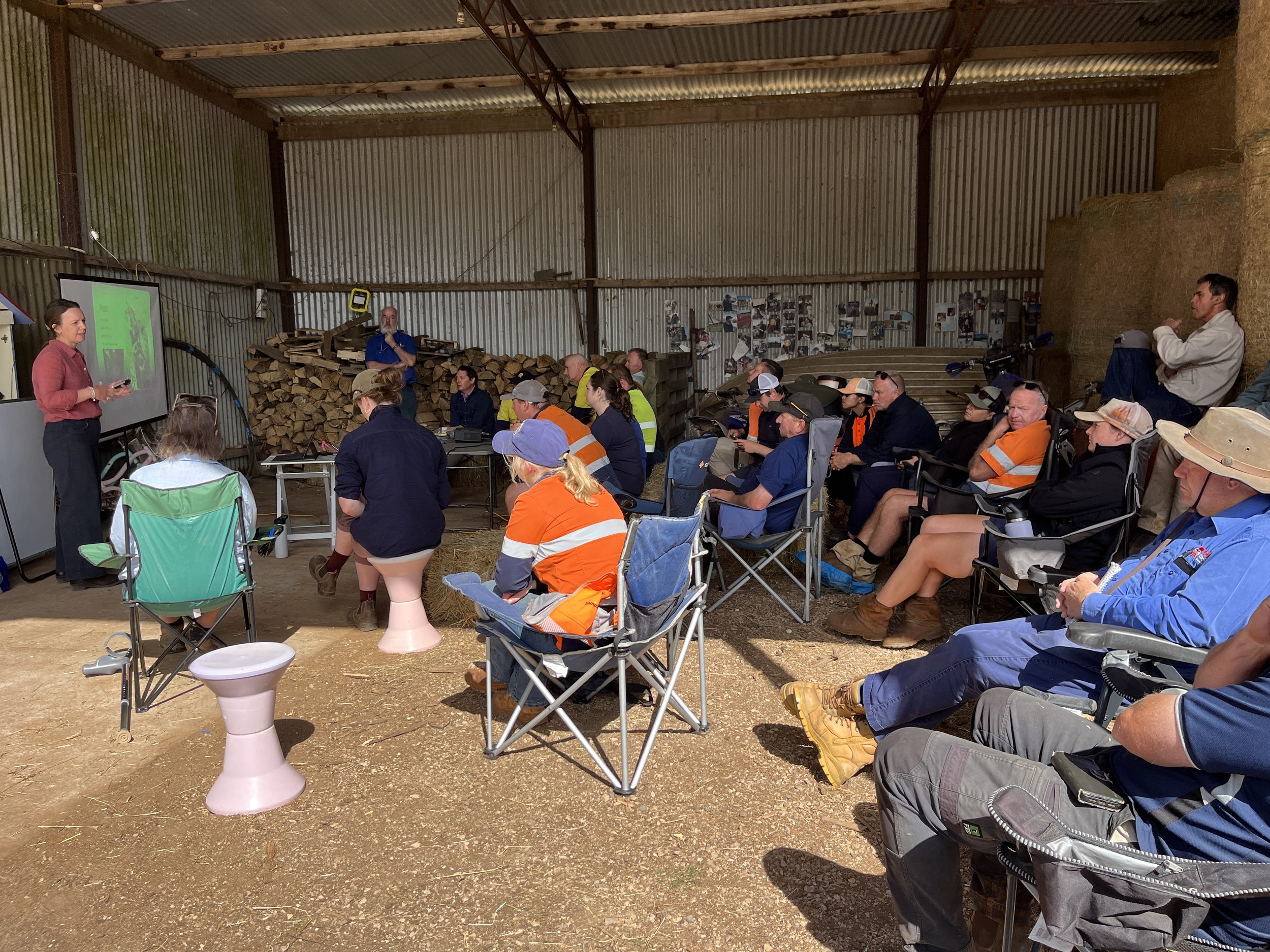
Sisters creek event – Rebecca Addison sharing photos of potato pests and associated beneficials for identification
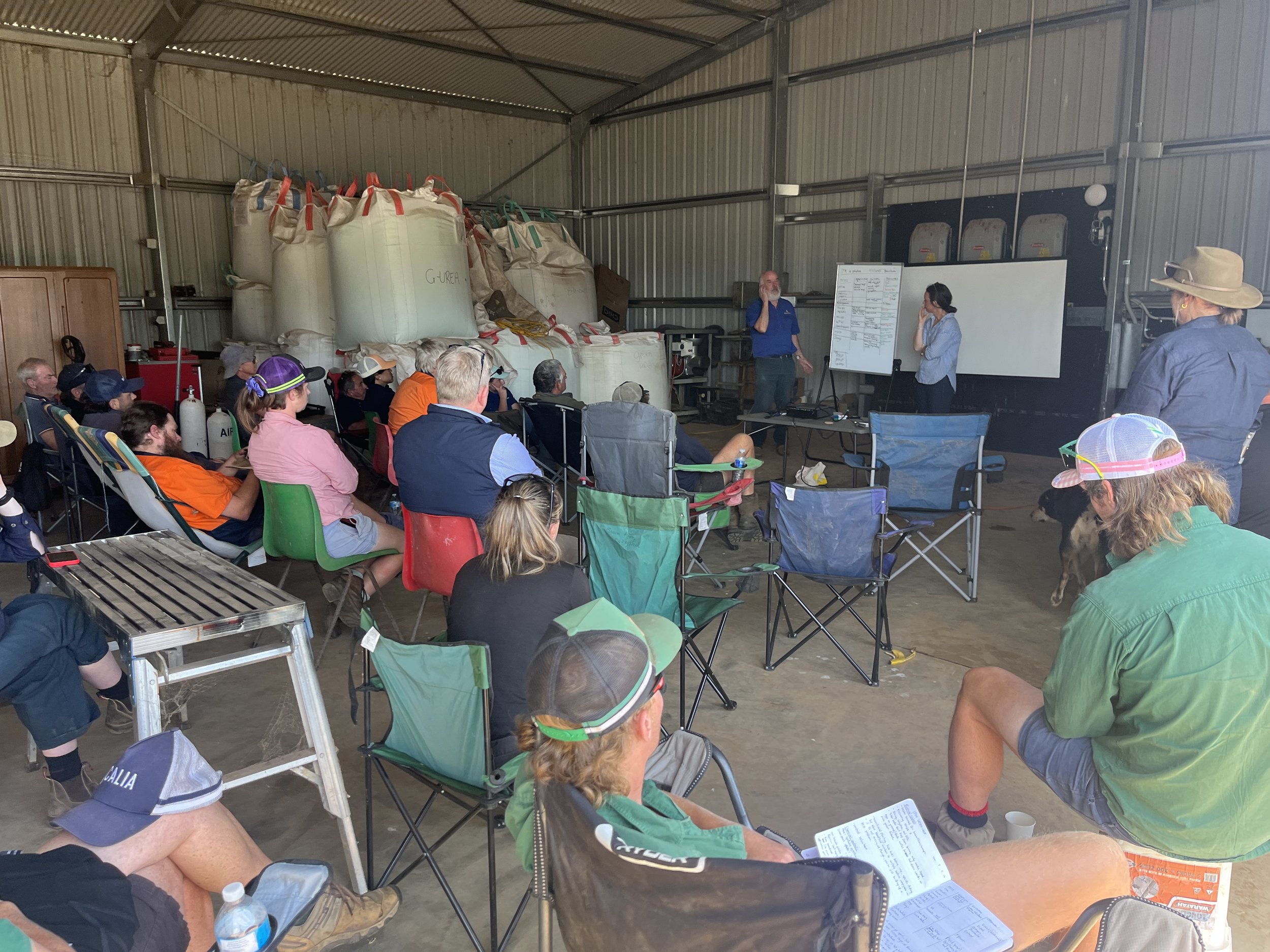
Branxholm event – Attendees gathering after the field component to develop an IPM strategy for key potato pests of the region
Acknowledgments:
The PotatoLink team would like to thank the host growers for hosting the events on their farm, and the presenters for sharing their knowledge and expertise with attendees.
