Building better crops from the ground up: Joel Williams workshop recap
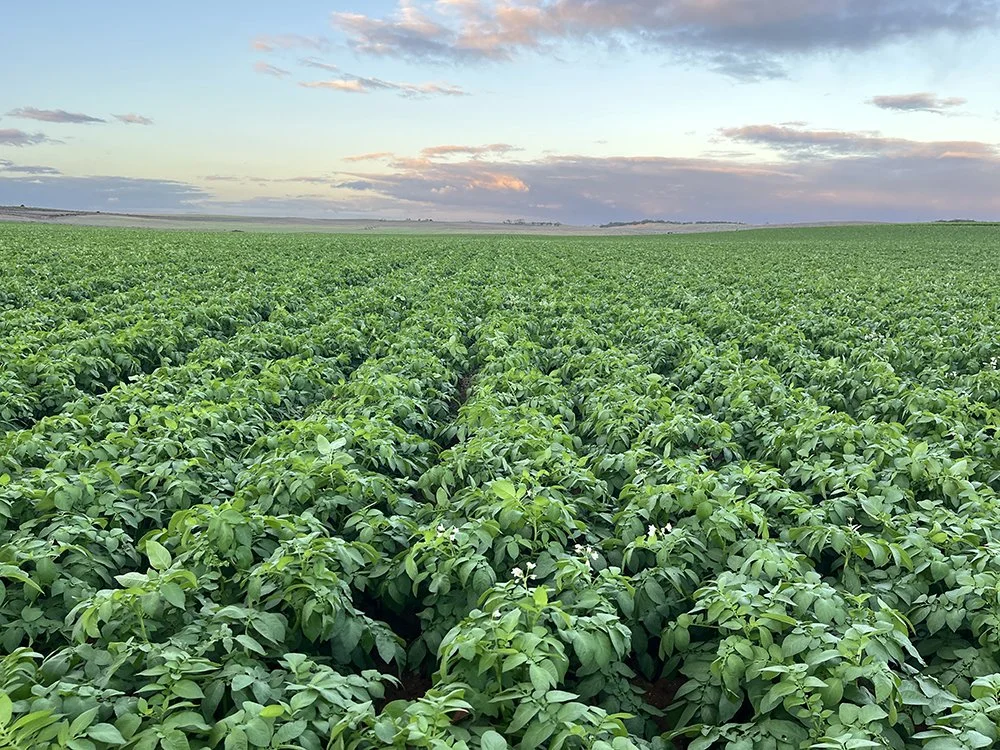
Potato crops at the workshop location in Forster Hill Farm, South Australia
In April, 25 growers, agronomists, and industry members gathered at Forster Hill Farm in Nildottie, South Australia, to learn about soil health with Joel Williams (Integrated Soils).
The event, a joint collaboration between VegNET and PotatoLink, explored practical strategies for improving regenerative cropping systems in potato, onion, and vegetable production.
Addressing key challenges across the Murraylands region, the session focused on sandy soils with low organic matter, nutrient leaching, declining soil biology, and challenges with salinity and sodicity.
Understanding the Basics
With his characteristic engaging style, Joel explored the fundamentals of plant nutrition and soil function, and the critical role soil organic matter plays in supporting soil biology, nutrient cycling, water-holding capacity, and overall input efficiency.
He then introduced the key nutrients required for effective photosynthesis before moving on to the process of nitrogen metabolism, covering the different forms of nitrogen that is taken up by the plant.
“Joel distilled complicated scientific processes with clarity,” Steph Tabone said.
“For example, he explained how plants convert nitrogen into amino acids and proteins, and how that conversion process has implications for how nitrogen fertilisers are selected and applied, in a way that was easy to understand.”
Joel also covered metabolic shortcutting, the principle that applying nitrogen in forms such as amino acids may reduce the energy demand on the plant and improve overall efficiency.
He drew upon a number of published research studies to support these concepts, which demonstrated improvements in germination, crop performance, yield potential, and tolerance to abiotic stresses under different nutrition strategies.
Building Resilience
A strong focus of the workshop was the connection between soil health, plant nutrition, and disease resilience. Joel discussed how increasing diversity within crop rotations can encourage healthier soil biology and improve tolerance to soilborne diseases, an ongoing challenge in intensive vegetable production systems.
But what role does nutrition play in protecting the plant itself?
Joel highlighted how specific nutrients strengthen plant defence mechanisms. Calcium, silicon, and boron, for example, contribute to cell wall integrity and improved plant resilience under stress conditions. This reinforces the principle that nutritional management extends beyond optimising growth, encompassing the broader goal of building plant systems with the capacity to withstand biotic and abiotic pressures.
Into the paddock
Moving into the field, attendees had the opportunity to inspect a healthy looking potato crop. Host grower, Aaron Haby, shared insights into his crop rotations and management approach, offering a practical perspective on how soil health principles are being applied on-farm.
During the field walk, a cereal plant from a previous rotation was pulled up to demonstrate the dense fibrous root system and visible rhizosheath formation ("dreadlocking"), where soil particles had bound tightly around the roots through a combination of root exudates and microbial activity.
It served as a compelling illustration of biological activity in action, and a reminder of the important role grasses and cereal species can play in improving soil structure, building organic matter, and supporting long-term soil function.
Knowledge as a tool
The workshop served as a valuable reminder that productive, resilient cropping systems are built from the ground up.
“I think several of the growers left feeling inspired and with a clearer understanding of how targeted nutritional management and soil health practices can strengthen crop performance,” Steph said.
“It was a timely reinforcement that knowledge of soil health and plant nutrition remains one of the most practical tools available.”
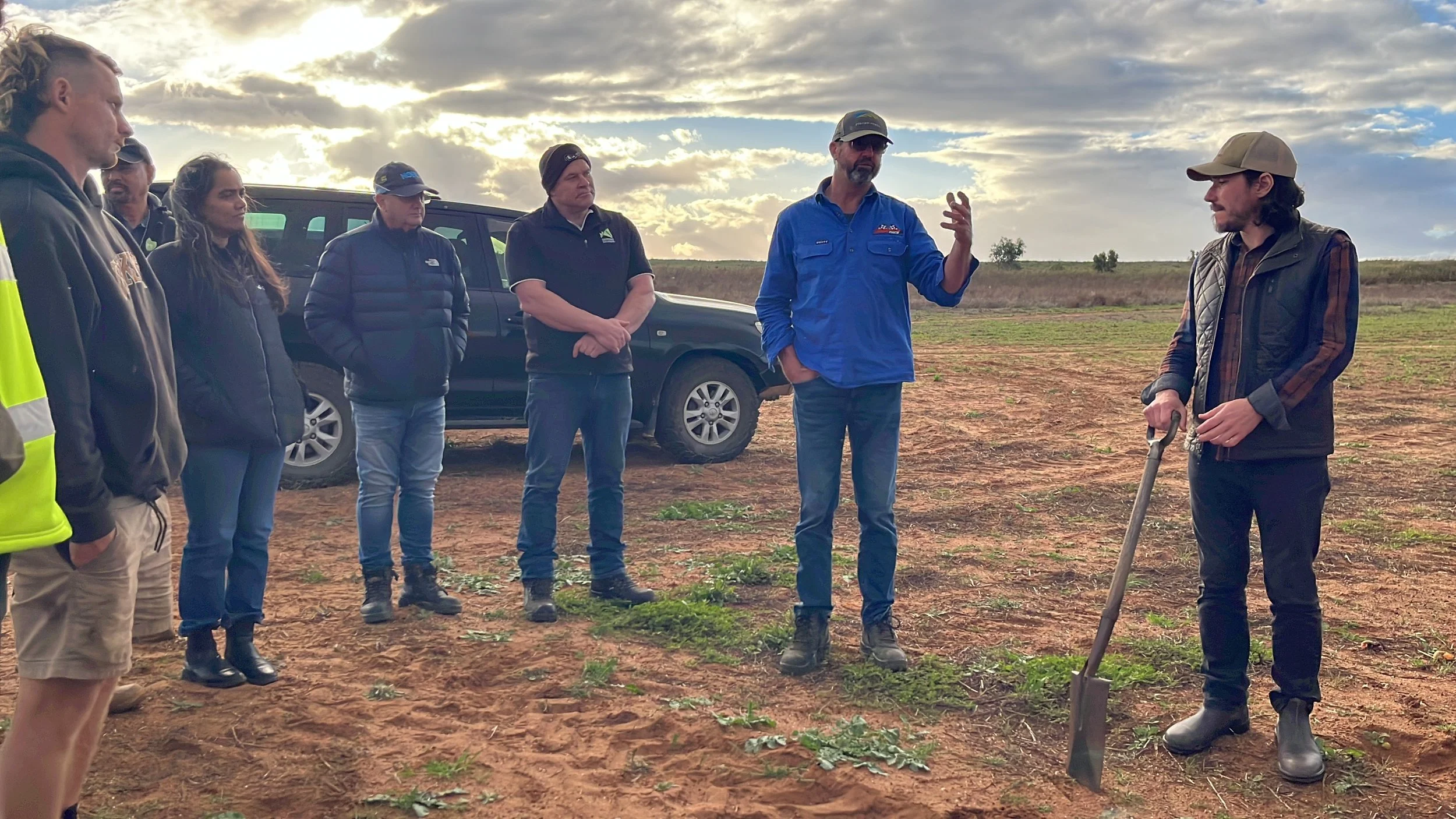
Host grower Aaron Haby, and presenter Joel Williams discussing the potato crops on site
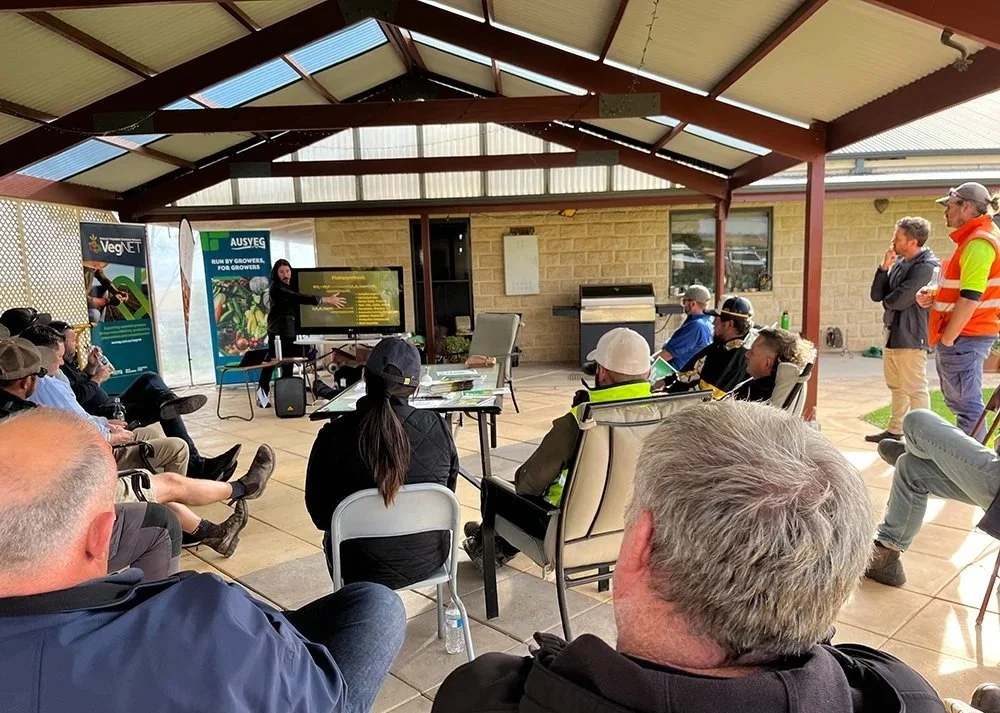
Joel Williams presenting soil biology theory to the workshop attendees
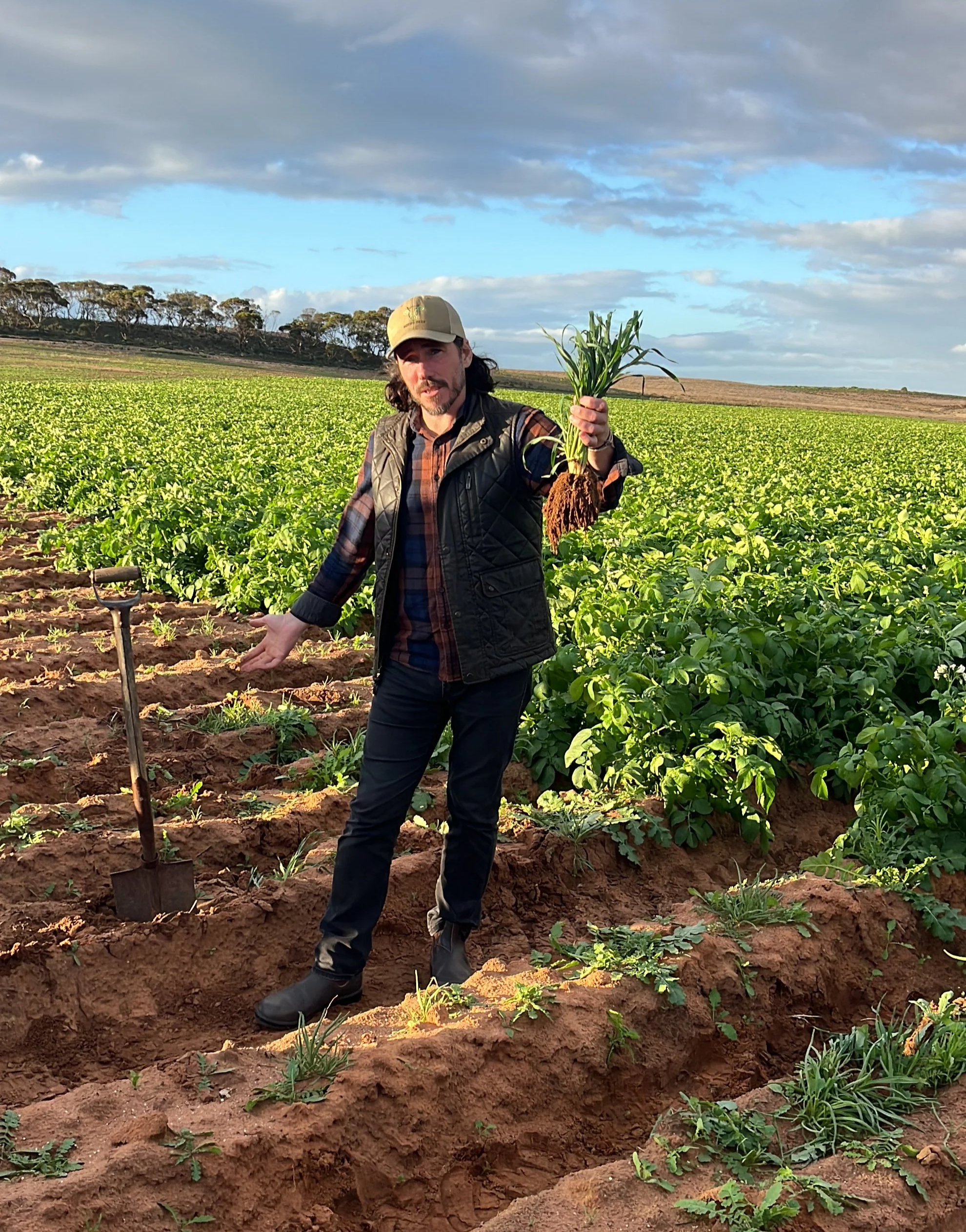
Joel Williams holding cereal plant, showcasing fibrous root system
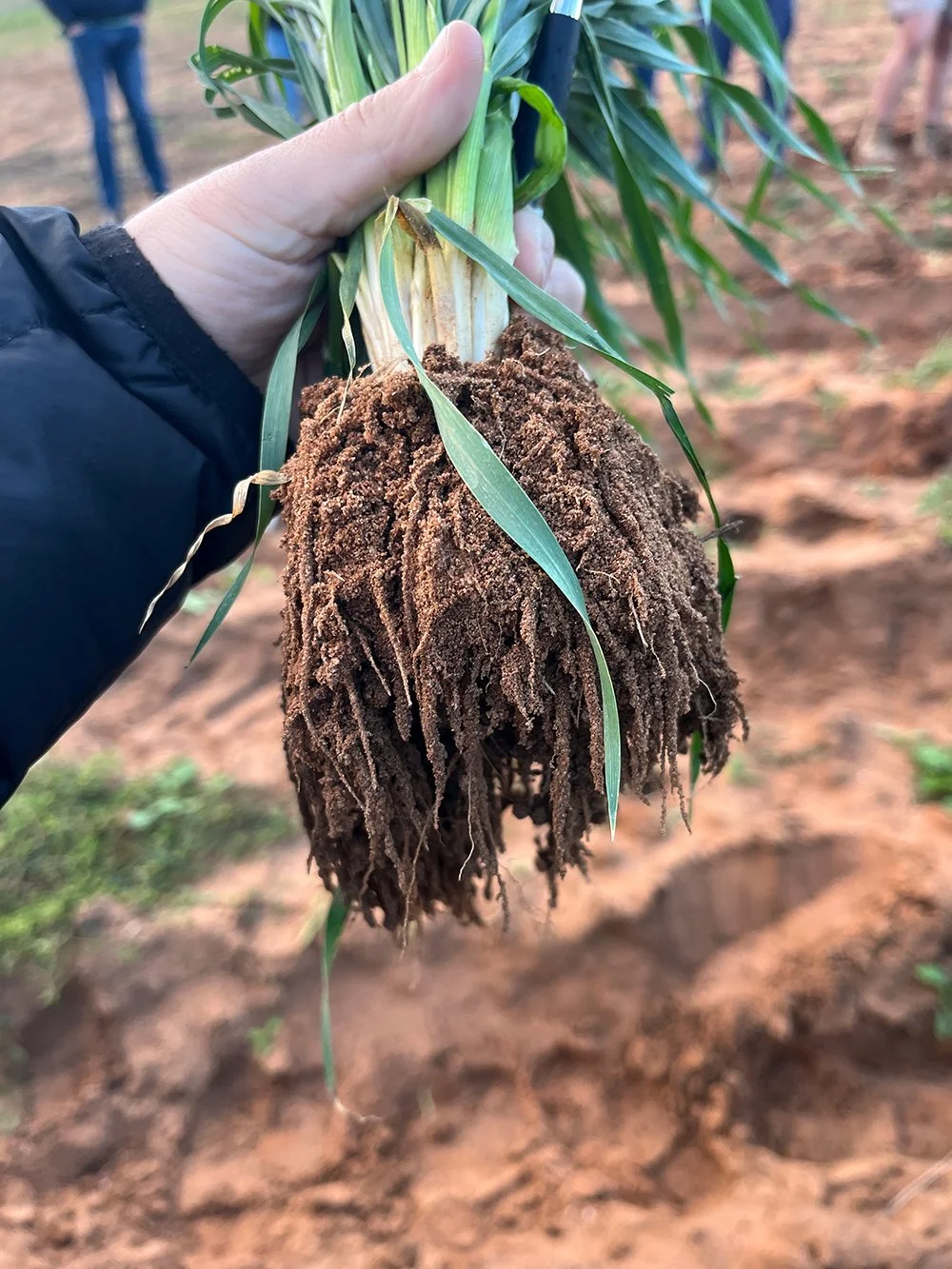
Close up of fibrous root system and rhizosheath (dreadlocking) on the roots demonstrating a healthy relationship of soil biology with the roots
