
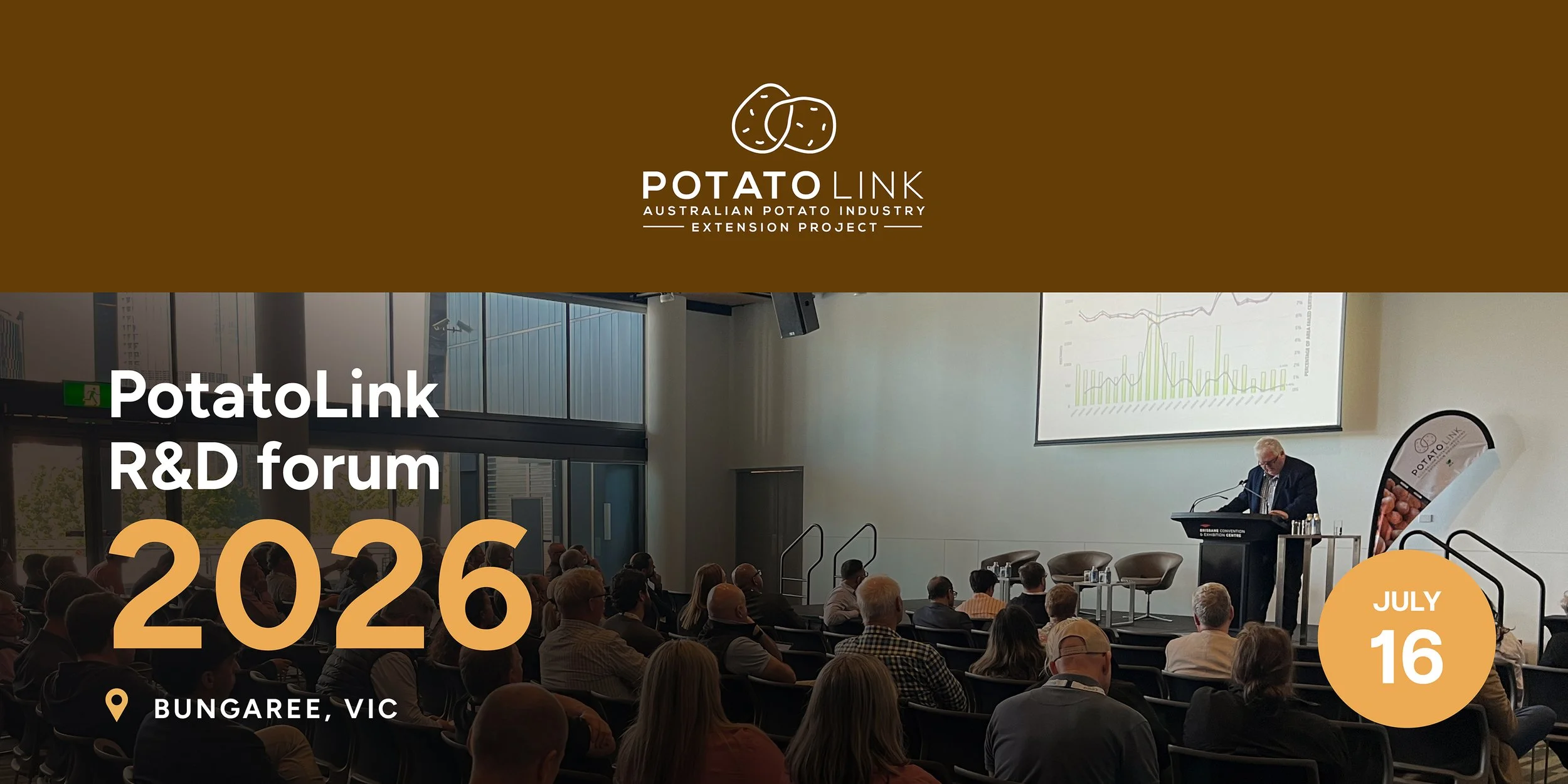
Event details
Date: Thursday 16 July 2026
Time: 2:00 pm - 7:30 pm (AEST) with a field walk to be held prior to event (See below)
Location: Bungaree Recreation Reserve
Registration: Click here to register by 9th Thursday July
Join us for the PotatoLink R&D Forum, bringing together growers, researchers, advisors, and industry members to explore the latest levy-funded potato research and development projects from across Australia.
The forum will focus on key topics including:
Integrated Disease Management (IDM)
Sustainability
Physiological age of potatoes
Biosecurity
Crop management
Hear directly from project leaders and industry experts as they share current findings, future opportunities, and the practical implications for Australian potato growers. See below for the full program and speakers.
The event will also provide valuable opportunities for networking, discussion, and collaboration across the industry.
Afternoon tea and dinner will be provided during the forum, with time throughout the day for networking and discussion.
Join us for a field walk prior to the event
A field walk showcasing different cover crops mixes will be held on Xavier Toohey’s farm, Springbank, VIC prior to the forum, including lunch on the field. Registrations will also be required for this.
Time: 11:30 am - 1:45 pm (AEST)
Location: Xavier Toohey’s farm, Springbank/Ballarat VIC
More details: Click here for full details of field walk
Registration: Click here to register by Thursday 9 July
View the R&D forum program below*
*Subject to slight changes.
-
2:00 - 2:30pm
-
2:30 - 2:35pm
Bonnie Dawson (AHR)
Overview of the day and upcoming activities.
-
2:35 - 2:45pm
Peter O’Brien (PotatoLink)
An update on PotatoLink activities, upcoming events, and extension opportunities supporting the Australian potato industry.
-
2:45 - 2:50pm - Introduction
Dr Kristen Stirling (RMCG)
Introduction of the IDM program from the program coordinator.
2:50 - 3:50pm - An integrated disease management program for the Australian Potato Industry (PT23002)
Professor Calum Wilson (University of Tasmania)
Professor Brajesh Singh (Hawkesbury Institute for the Environment, Western Sydney University)
Hear the latest updates from the national Integrated Disease Management (IDM) project, including field trial outcomes, emerging disease management approaches, and practical insights to support healthier and more resilient potato production systems.
3:50 - 4:10pm - IDM discussion panel
Professor Calum Wilson & Professor Brajesh Singh
Open Q&A and discussion with attendees on disease management challenges, opportunities, and research priorities.
-
-
4:25 - 4:40pm
Dr Nathan Tivendale
Updates from the UTAS/TIA project "How old is your seed potato?", and practical tools for growers to identify seed potato age.
-
4:40 - 4:55pm - Potato sustainability – undertaking a life cycle assessment (PT24001)
Tim Grant (Lifecycles)
Learn how this project is assessing the environmental performance of the Australian potato industry to support sustainability initiatives and future industry investment. The research will help identify opportunities for practice change, benchmark Australian production against global best practice, and provide growers with insights to improve the sustainability and resilience of their farming businesses.
4:55 - 5:05 Industry update
To be confirmed
4:30pm - Sustainability discussion
Interactive session with Q&A followed by short break
-
5:15 - 5:30pm
-
5:30 - 5:40pm - Biosecurity update
Zarmeen Hassan (AUSVEG)
An update on current biosecurity issues in the Potato industry, and emerging threats.
5:40 - 5:50pm - Strategic agrochemical review
David Daniels (AUSVEG)
An update on the strategic agrochemical review process, including current priorities, industry challenges, and efforts to support future access to crop protection tools.
5:50 - 6:05pm - Accelerating adoption of Area Wide-Integrated Crop Management in vegetable, onion and potato growing regions (MT24012)
Dr. Zelalem Lema Moti (CSIRO)
Explore validated insights from cross-industry workshops and research focused on integrated crop management approaches to improve productivity, sustainability, and long-term resilience in potato farming systems.
6:05- 6:15pm - Management discussion panel
David Daniels and Dr. Zelalem Lema Moti
Interactive session with Q&A.
-
6:15 - 6:30pm
Bonnie Dawson (AHR) and Peter O’Brien (PotatoLink)
Discuss key takeaways, ask your burning questions, and finish off with monitoring and evaluation forms and notice of future events.
-
6:30pm onwards
Finish the night with dinner (provided) and plenty of time to network with other growers and industry members.
Meet the speakers
Dr Kristen Stirling, RMCG
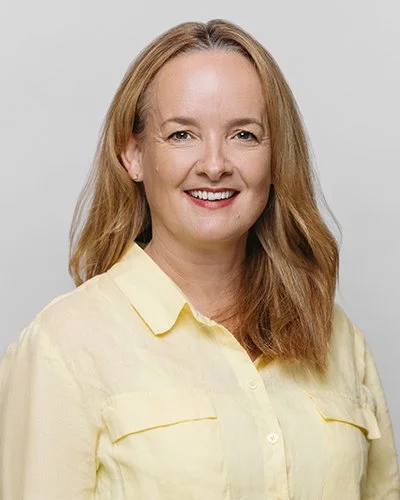
Kristen Stirling is the Coordinator of the Australian Potato Integrated Disease Management (IDM) Program, providing strategic coordination across industry, research and extension partners to support a unified approach to managing soil-borne disease in Australian potato production. Kristen brings extensive experience in agricultural research, industry development, extension and program management, with a strong track record in translating research into practical outcomes for industry. Currently at RMCG, she has previously supported vegetable and potato growers in Western Australia manage pests and diseases while working as an R&D Officer for the Department of Agriculture.
Professor Calum Wilson, University of Tasmania
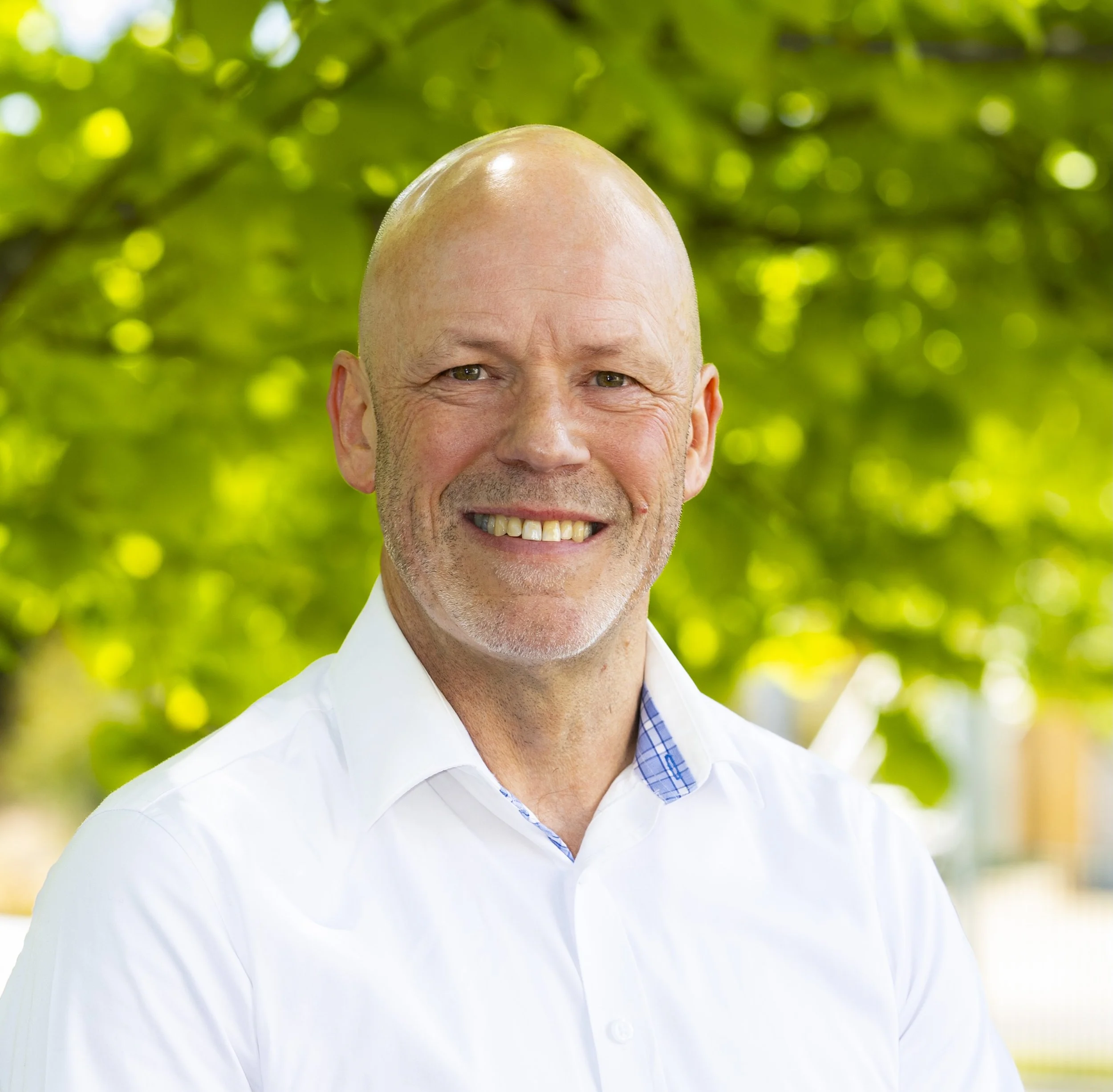
Professor Calum Wilson is a global leader in applied plant pathology research. He heads a team currently working to understand and combat plant diseases that impact on quantity, quality and sustainability of potato production. Recent research has focused on development of novel disease-controls, host:pathogen interactions, and more generally around soil ecology and soil health. His team works closely with primary producers and food processors ensuring relevance and integration of research outcomes within commercial production systems. In reflection of this, Prof. Wilson has received several awards for his work from industry clients and government.
Professor Brajesh Singh, University of Western Australia
Professor Brajesh Singh is a Professor of Soil biology at School of Agriculture & Environment, University of Western Australia. His applied research harnesses the knowledge of soil biology and plant microbiomes to improve agriculture productivity, and disease management. Outcomes from his research have informed many industrial products including pathogen diagnostics and disease management tools. His work has impacted multiple policy decisions at national and international levels, and he is currently serving as the Chairman of UN- FAO’s Intergovernmental Panel on Soil and previously acted as the Chair of FAO- International Network on Soil Biodiversity (FAO-NETSOB). He has worked intensively with Australian agriculture and horticulture sectors including grain, cotton, and vegetables to support industry growth.
Dr Nathan Tivendale, University of Tasmania
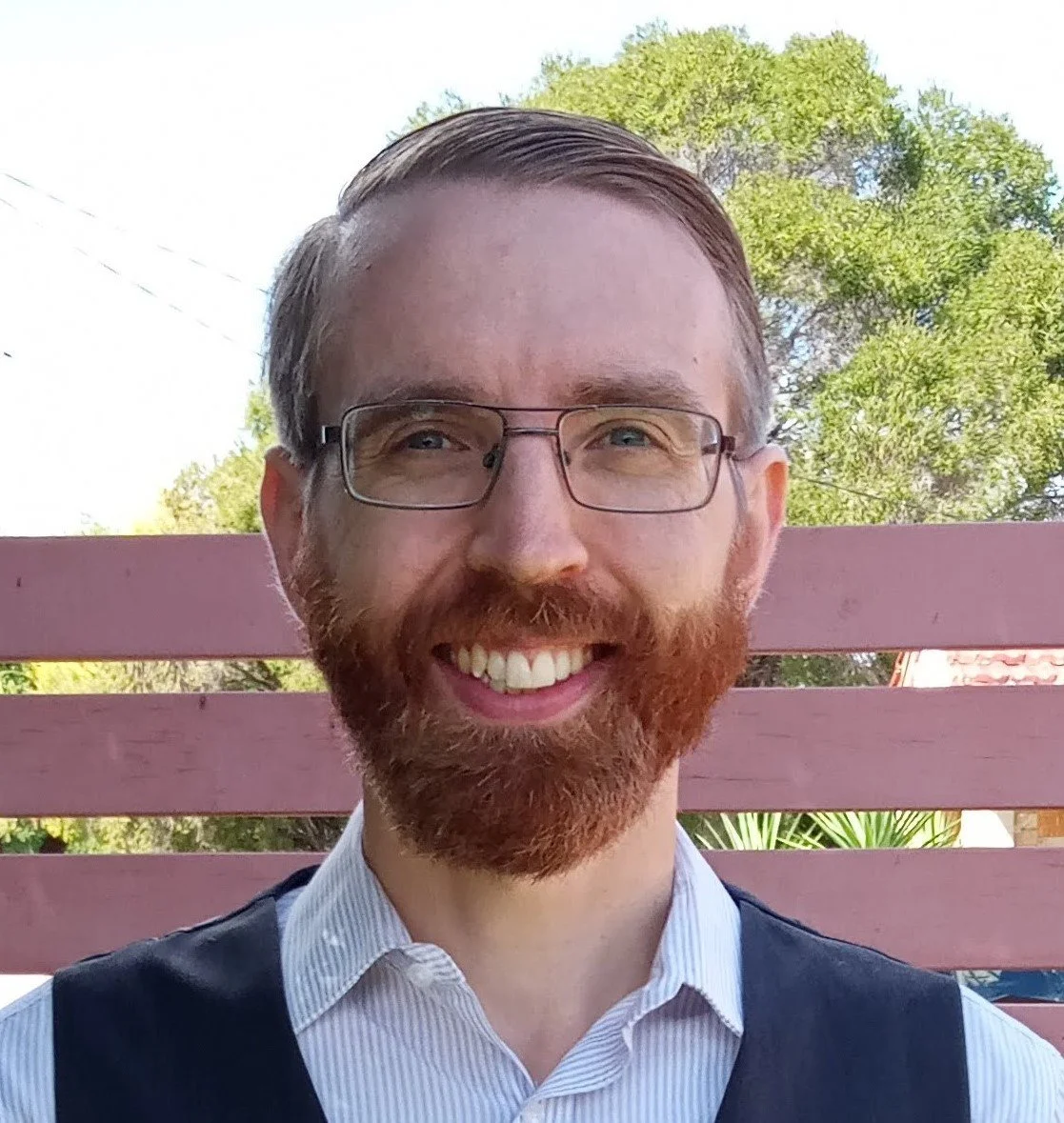
I am a Lecturer in Production Horticulture with the Tasmanian Institute of Agriculture (TIA) at the University of Tasmania. In my lab, we aim do excellent plant biochemistry and plant physiology research that enhances our understanding of plants in a horticultural context and to leverage this knowledge to grow the value of horticulture in cool climate regions. Prior to working at TIA, I held research positions in the Centre of Excellence in Plant Energy Biology at The University of Western Australia (UWA), in the Department of Horticultural Science at University of Minnesota and in the pharmaceutical industry. I hold a and a Bachelor of Biotechnology a PhD in plant biochemistry and a Graduate Certificate in Tertiary Teaching. I firmly believe that, through R&D, people can use plants to benefit humankind. Plants are so important to humans. They provide food, fibre, pharmaceuticals and fuel. I am excited to be involved in increasing our fundamental understanding of plants and coming up with ways to harness this new knowledge for human benefit.
Tim Grant, Lifecycles
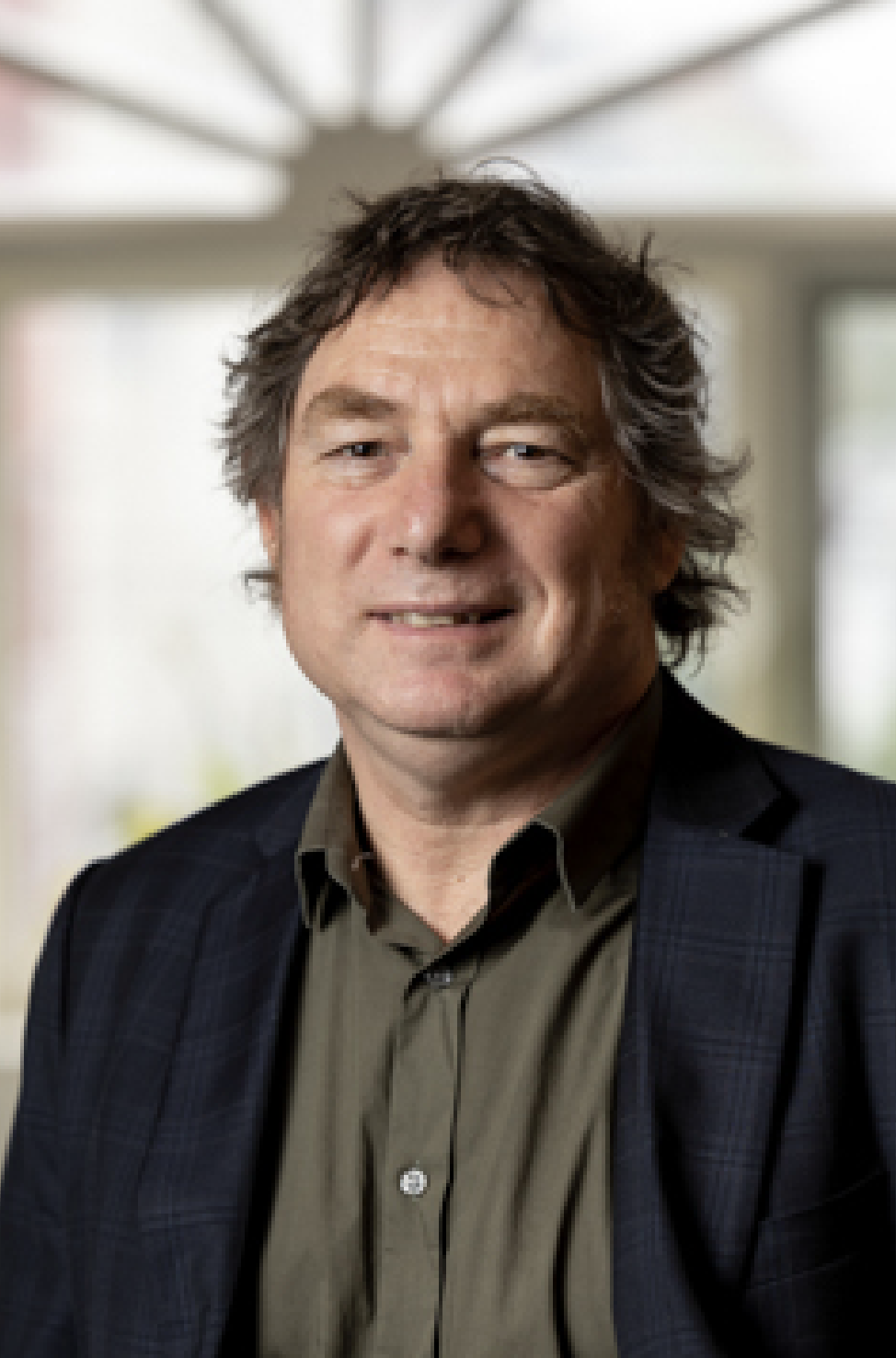
Tim Grant is a leading figure in the international Life Cycle Assessment (LCA) community, with over 30 years of experience advancing life cycle methodology, data development and applied sustainability practice. He co-chairs the UN Life Cycle Initiative's Ecosystem Services Task Force, has played a foundational role in the development of Australia's national life cycle inventory database (AusLCI), including over 20 years developing data on agriculture products.
Tim is the founder and sole director of Lifecycles, Australia’s leading consultancy specialising in sustainability measurement, LCA and circular economy. Through rigorous studies, training and the provision of tools and data sets, Lifecycles supports businesses and governments to embed science-based environmental decision-making into strategy and policy.
Zarmeen Hassan, AUSVEG
Zarmeen Hassan is the national manager of biosecurity and extension in AUSVEG, and brings a wealth of experience across industry and the private sector to her work leading AUSVEG’s science and extension projects, including from previous roles with global organisations like Monsanto, FrieslandCampina, Reckitt Benckiser and Coca-Cola.
David Daniels, AUSVEG
David Daniels is the National Agrichemical Manager at AUSVEG, where he leads the National Strategic Agrichemical Management Program on behalf of the Australian vegetable, potato and onion industries. With more than 20 years of experience across government and horticulture, David works closely with growers, regulators, researchers and agrichemical companies to help gain and maintain access to modern and effective crop protection tools. Prior to joining AUSVEG, he spent more than 12 years with Citrus Australia in a similar leadership role, building extensive expertise in agrichemical regulation, permits, market access and industry advocacy.
Dr. Zelalem Lema Moti, CSIRO
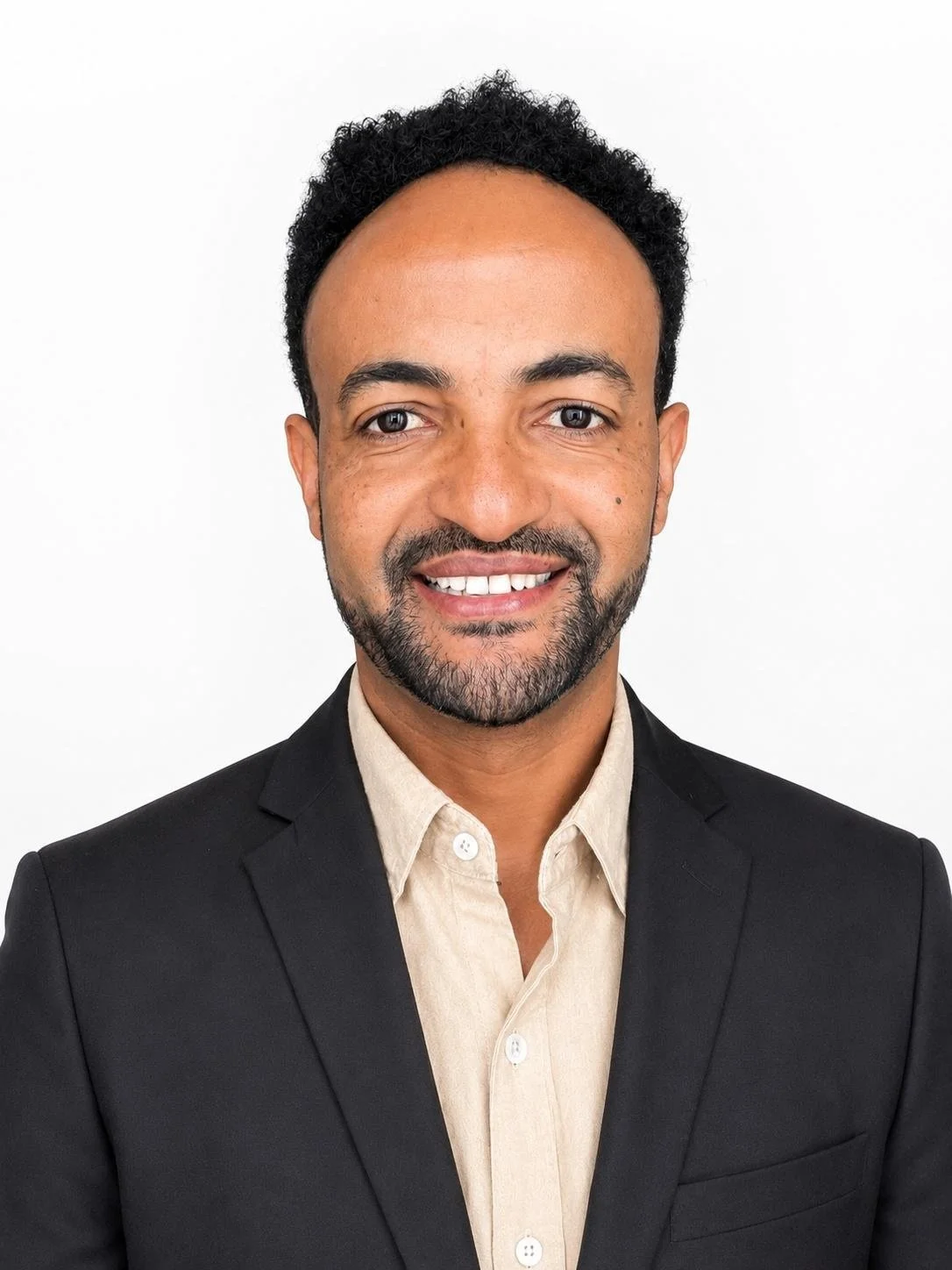
Dr Zelalem Lema (Moti) is a social science Research Scientist at CSIRO. He leads and contributes to Hort Innovation projects, focusing on how innovation and scaling approaches can be better designed and supported for impact. His work emphasises close collaboration with growers and industry stakeholders to support practical, on-ground outcomes through co-design. This includes using area-wide approaches that connect farms, people, ideas, and resources to address shared challenges and strengthen the resilience of farms and landscapes. He also brings experience from previous roles in international agricultural research, including work with CGIAR/ILRI in Africa.
More information
Please contact Bonnie Dawson, Applied Horticultural Research | 0466 465 896 | bonnie.dawson@ahr.com.au